Vendes sistemas de agua a fábricas, hospitales, hoteles y plantas embotelladoras. Cada comprador necesita un tipo de agua diferente. Uno quiere agua pura para las calderas. Otro quiere agua apta para el consumo. Si eliges el tipo equivocado, te arriesgas a devoluciones, a perder contratos y a tener clientes enfadados. He visto cómo algunos distribuidores han perdido clientes importantes por una sola especificación errónea.
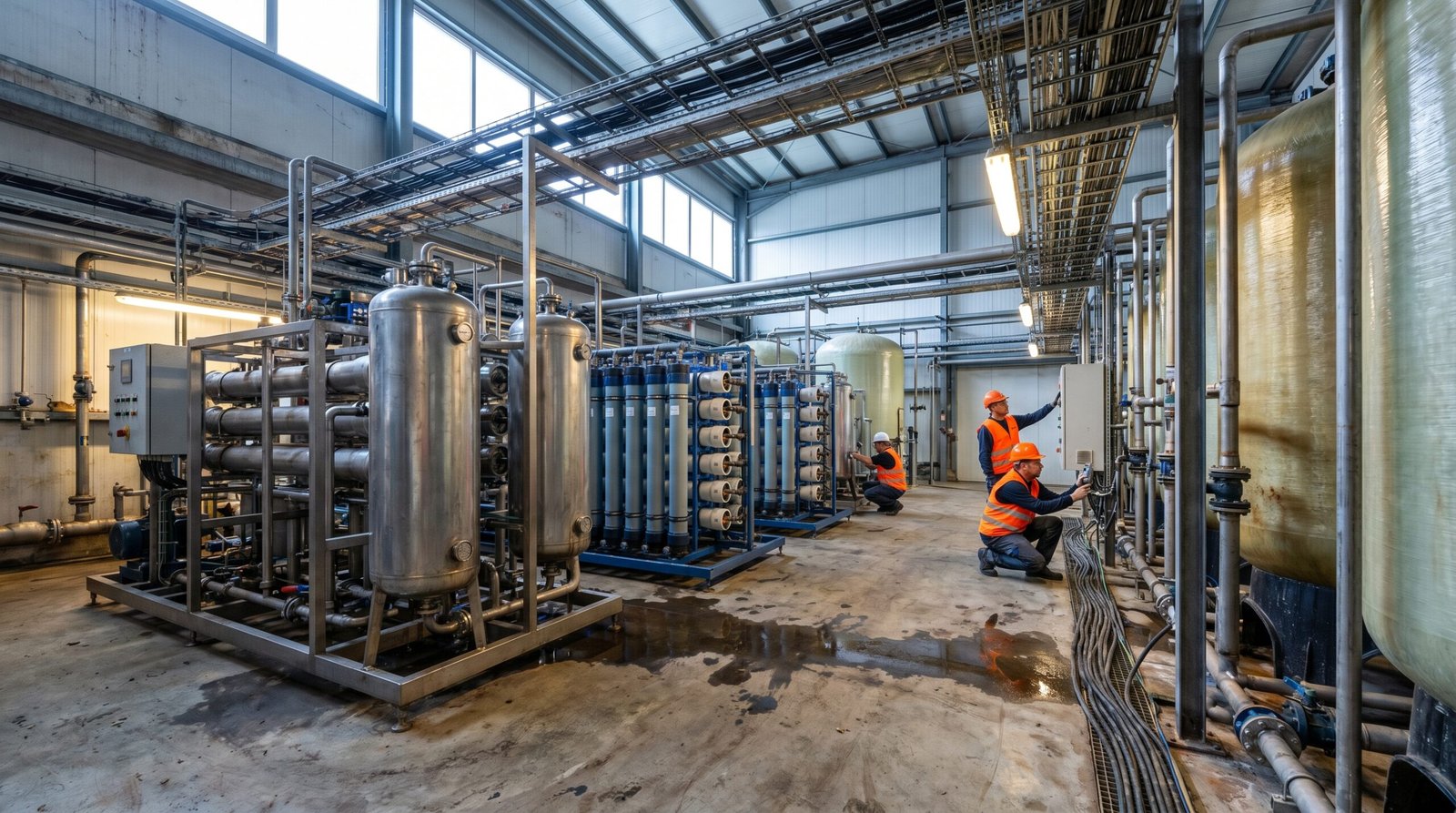
Los sistemas de filtración de agua industrial se clasifican en varios tipos principales: ósmosis inversa (RO), ultrafiltración (UF), intercambio iónico, filtración por medios filtrantes y desinfección por UV. Cada tipo elimina diferentes sustancias del agua. La RO elimina las sales disueltas. La UF retiene partículas y microbios. El intercambio iónico ablanda el agua o la desioniza por completo. La mayoría de las plantas combinan dos o más tipos para alcanzar la calidad de agua deseada.
A continuación te explicamos cómo funciona cada tipo y para qué tipo de clientes es adecuado.
¿En qué se diferencian la ósmosis inversa, la ultrafiltración y el intercambio iónico?
Tu cliente te pide “agua pura”. Esa expresión, por sí sola, no significa nada. Tanto la ósmosis inversa (RO) como la ultrafiltración (UF) y el intercambio iónico purifican el agua, pero de formas muy diferentes. Veo cómo algunos distribuidores recomiendan la opción equivocada y pierden dinero con las devoluciones.
La ósmosis inversa (RO), la ultrafiltración y el intercambio iónico se diferencian por lo que eliminan y cómo lo hacen. La ósmosis inversa utiliza una membrana de 0,0001 micras para eliminar las sales disueltas y los metales pesados. La ultrafiltración utiliza poros más grandes para retener partículas y microbios, pero conserva los minerales. El intercambio iónico sustituye iones en una resina para ablandar o desionizar completamente el agua. Cada uno de ellos es adecuado para una tarea diferente.
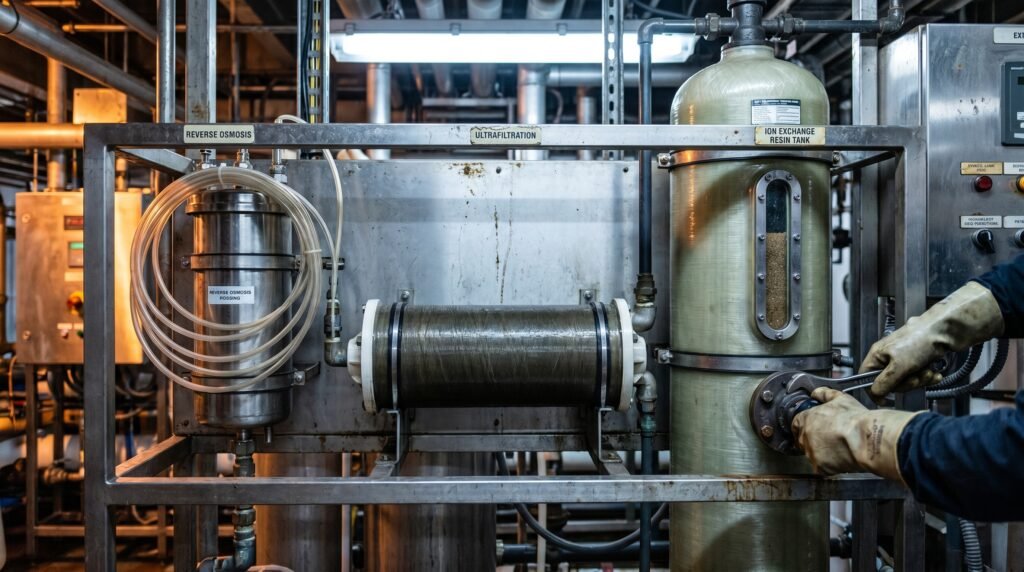
Cada tecnología destaca en un ámbito concreto. Como distribuidor, no necesitas una titulación en ingeniería. Lo que tienes que hacer es elegir el sistema que mejor se adapte al problema del agua que tengas entre manos. Aquí tienes una versión simplificada que puede utilizar tu equipo de ventas.
Lo que mejor hace la ósmosis inversa
La ósmosis inversa (RO) hace pasar el agua a través de una membrana muy fina. El poro mide tan solo 0,0001 micras. Ese espacio es lo suficientemente pequeño como para retener sales, metales pesados y casi cualquier otra sustancia. Nuestro sistema de RO de 8 etapas alcanza un nivel de esterilización del 99,99%, por lo que el agua sale limpia y segura. Este sistema se adapta a las necesidades de alta pureza: plantas embotelladoras, laboratorios, industria electrónica y cualquier instalación con un TDS elevado o agua salobre. La ósmosis inversa consume más energía y agua que otros sistemas. Nuestro diseño sin aguas residuales reduce esa pérdida, lo que supone un importante argumento de venta en los mercados con escasez de agua de África y Oriente Medio.
Las ventajas de la ultrafiltración
La UF utiliza un poro más ancho que la RO, de alrededor de 0,01 micras. Bloquea partículas, bacterias y virus, pero deja pasar los minerales naturales. Por eso, el agua sigue teniendo un sabor fresco, no insípido. Este aspecto es importante para los consumidores de agua potable a los que no les gusta el agua desmineralizada. La UF también consume menos energía y desperdicia menos agua que la RO. Deberías ofrecer la UF cuando el agua de origen esté bastante limpia y el objetivo sea obtener un agua segura y de buen sabor. Es ideal para colegios, hoteles y hogares.
Cuando el intercambio iónico es la solución
El intercambio iónico prescinde de la membrana. Intercambia los iones no deseados por otros inofensivos en un lecho de resina. Un descalcificador sustituye los elementos que causan la dureza, como el calcio y el magnesio, por sodio. Un desionizador elimina casi todos los iones para obtener agua ultrapura. Este sistema protege las calderas, las torres de refrigeración y las tuberías de vapor, donde las incrustaciones destruyen rápidamente el metal. Tus clientes industriales adquirirán sistemas de intercambio iónico para proteger sus máquinas y reducir su presupuesto de reparaciones.
La tabla siguiente resume los tres tipos para que puedas compararlos de un vistazo.
| Característica | Ósmosis inversa (RO) | Ultrafiltración (UF) | Intercambio iónico |
|---|---|---|---|
| Método | Membrana de 0,0001 micras | Membrana de ~0,01 micras | Intercambio iónico con resina |
| Elimina | Sales, metales, microorganismos | Partículas, bacterias, virus | Dureza o todos los iones |
| ¿Conserva los minerales? | No | Sí | En general, no |
| Desperdicio de agua | Superior (opción sin residuos) | Bajo | Bajo (necesita recarga) |
| Consumo de energía | Más alto | Inferior | Bajo |
| Ideal para | Embotellado, laboratorios, TDS elevado | Agua potable, hoteles | Calderas, agua dura |
¿Qué sistema de filtración se adapta mejor a tu sector y aplicación?
Con un solo catálogo, prestas servicio a muchos sectores. Un hospital, una planta de zumos y un hotel necesitan agua, pero nunca el mismo tipo de agua. Una vez vi cómo un distribuidor enviaba un descalcificador a una planta embotelladora, y el trato se fue al traste rápidamente.
El sistema de filtración de agua industrial adecuado depende del sector y del uso final. Las plantas embotelladoras y de bebidas necesitan ósmosis inversa (RO) para obtener agua pura. Los hospitales y los laboratorios necesitan ósmosis inversa (RO) más rayos ultravioleta (UV) para obtener agua estéril. Los hoteles y los colegios necesitan ultrafiltración (UF) para obtener agua potable segura. Las calderas y las fábricas necesitan intercambio iónico para evitar la formación de incrustaciones. La mayoría de las grandes instalaciones combinan dos o más tipos.
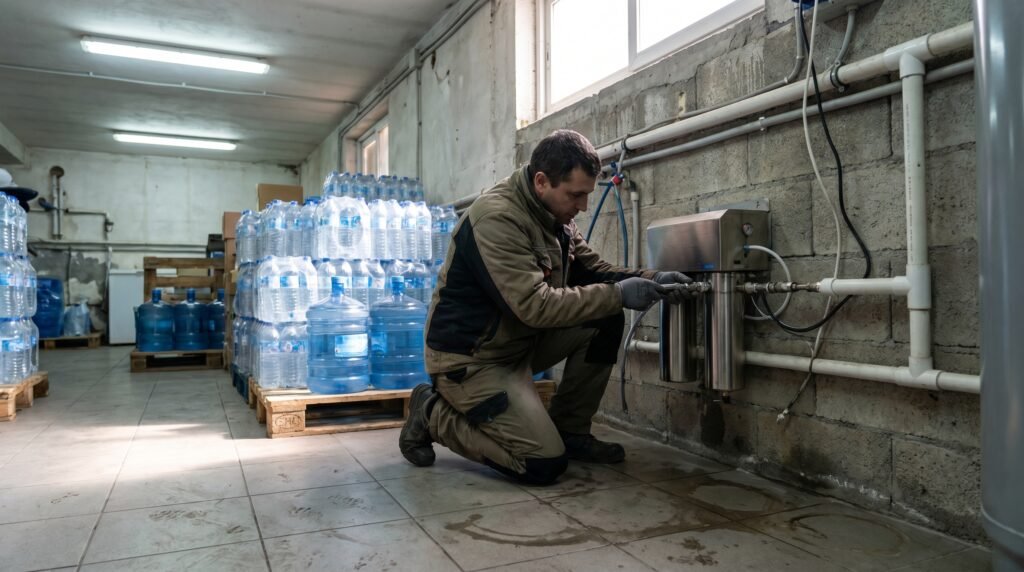
Si adaptas el sistema al sector, el trato casi se cierra solo. Realizamos envíos a 45 países y hemos vendido más de 2 000 000 de unidades, y los mismos patrones de compra se repiten una y otra vez. Esto es lo que se vende y por qué tus clientes lo demandan.
Agua potable para hoteles, colegios y puntos de recarga
Estos compradores buscan agua segura y de buen sabor a un precio justo. Los sistemas de ultrafiltración (UF) o de ósmosis inversa (RO) para uso comercial ligero se adaptan perfectamente a sus necesidades. Las estaciones de recarga de agua se están extendiendo rápidamente por África, Asia y América Latina. Su funcionamiento es económico y su mantenimiento sencillo. Al tener estas unidades en stock, se renueva el inventario rápidamente y se mantiene el flujo de caja.
Agua de alta pureza para embotellado, bebidas y alimentación
Las plantas embotelladoras y de bebidas dependen de la pureza del agua. Necesitan ósmosis inversa (RO), a menudo nuestro sistema de 8 etapas, para eliminar todos los sólidos disueltos. Las plantas de alimentos y de hielo necesitan el mismo agua limpia. Fabricamos sistemas de ósmosis inversa, líneas completas de llenado de agua para barriles, botellas y bolsas, además de máquinas de hielo y maquinaria para el procesamiento de alimentos. De este modo, puedes vender una línea de producción completa a un solo cliente, no solo una caja. Este enfoque aumenta el valor de tu pedido y consolida la relación con el cliente.
Agua de proceso para hospitales, laboratorios y fábricas
Los hospitales y los laboratorios necesitan agua estéril y de alta pureza. El sistema de ósmosis inversa (RO) combinado con irradiación UV continua cumple con este requisito, y nuestro laboratorio certificado por el CNAS avala su calidad. Las fábricas con calderas y torres de refrigeración necesitan un sistema de intercambio iónico para combatir las incrustaciones. Las incrustaciones deterioran sus equipos y agotan su presupuesto. Cuando vendes el sistema que protege ambos, te conviertes en su primera opción para el próximo pedido.
Contamos con más de 120 patentes y fabricamos más de 200 modelos, por lo que podrás abastecer a casi cualquier sector con un único proveedor. En la tabla siguiente se indican los sectores más habituales y el sistema más adecuado para cada uno de ellos.
| Sector | El mejor sistema | Por qué encaja | Velocidad del SKU |
|---|---|---|---|
| Hoteles y colegios | UF / RO ligera | Agua segura y de sabor fresco | Rápido |
| Estaciones de recarga | Ósmosis inversa comercial | Bajos costes de funcionamiento, fácil mantenimiento | Muy rápido |
| Embotellado y bebidas | Ósmosis inversa de 8 etapas | Elimina todos los sólidos disueltos | Constante |
| Hospitales y laboratorios | Ósmosis inversa + UV | Agua estéril de alta pureza | Constante |
| Calderas y fábricas | Intercambio iónico | Evita la formación de incrustaciones, que supone un alto coste | Constante |
Cómo elegir el sistema de filtración industrial adecuado
Hay dos formas de perder una venta. Si ofreces un sistema demasiado pequeño, este fallará al someterse a una carga elevada; si ofreces uno demasiado grande, el precio ahuyentará al comprador. He visto cómo ambos errores han echado por tierra buenos negocios.
Para elegir el sistema de filtración de agua industrial adecuado, hay que partir de cuatro aspectos: la calidad del agua de origen, el uso previsto del agua, el caudal necesario en T/h y las certificaciones exigidas por tu mercado. A continuación, hay que hacer coincidir estos aspectos con el tipo de sistema. Antes de realizar el pedido, también hay que comprobar los plazos de entrega del proveedor, la disponibilidad de piezas de recambio y el servicio posventa.
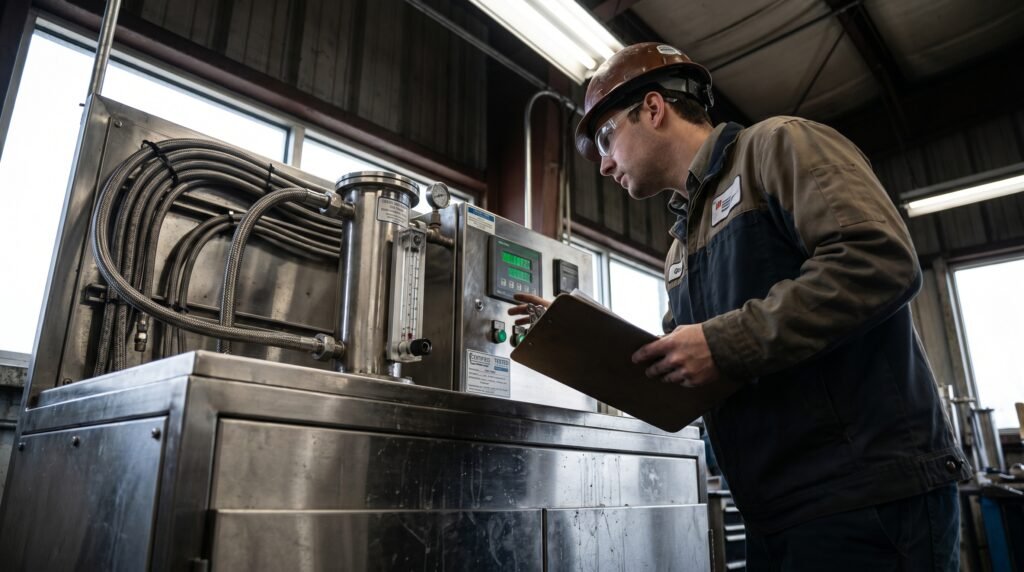
Un sistema que parece estupendo sobre el papel no sirve de nada si la fábrica que lo respalda te falla. Por eso siempre tengo en cuenta dos aspectos: el sistema y el proveedor. Ambos deben cumplir los requisitos.
Empieza por el agua y la necesidad
Hay que empezar por el agua de origen. Un TDS elevado o el agua salobre indican que hay que optar por la ósmosis inversa (RO). El agua dura indica que hay que optar por el intercambio iónico. El agua limpia que solo necesita ser potable se trata mediante ultrafiltración (UF). A continuación, se establece el caudal. Una pequeña estación de recarga y una gran fábrica necesitan capacidades muy diferentes. Si te equivocas con el caudal en T/h, el sistema fallará o supondrá un gasto innecesario. Debes preguntar a tu cliente cuál es su volumen diario de agua antes de elaborar el presupuesto.
No te saltes las certificaciones necesarias para tu mercado
Aquí es donde muchos distribuidores se llevan una sorpresa desagradable. Un producto excelente que no se puede despachar en la aduana se convierte en stock muerto. Contamos con las certificaciones CE, SASO, BIS, INMETRO, NOM, KC, PSE, ESMA y muchas más, además de asistencia en materia de cumplimiento normativo para más de 30 mercados. Así, tu producto llega a tu país de forma legal y a tiempo. Siempre debes confirmar qué certificado concreto necesita tu mercado antes de que se envíe el pedido.
Juzga la fábrica, no solo la caja
Esta es la cruda realidad tras 15 años dedicándonos a la exportación: la fábrica es más importante que cualquier especificación concreta. Los retrasos en los envíos, un servicio posventa deficiente y los defectos ocultos te hacen perder clientes por los que has trabajado duro. Nuestra fábrica cuenta con una tasa de aprobación del 99,61 TP3T y sometemos 1001 TP3T de unidades a pruebas de estanqueidad, caudal de agua y envejecimiento de 24 horas. Respaldamos cada unidad con una garantía de dos años y piezas de recambio disponibles. Además, realizamos envíos desde Qingdao y Shanghái en condiciones FOB, CIF o DDP, para que su cadena de suministro se mantenga estable y predecible.
La siguiente lista de comprobación ofrece a tu equipo una forma rápida de evaluar cualquier operación.
| Paso | Lo que debes comprobar | Por qué es importante para ti |
|---|---|---|
| 1. Agua de origen | TDS, dureza, turbidez | Un tipo incorrecto implica devoluciones |
| 2. Uso previsto | Para consumo, para procesos, de alta pureza | Configura el sistema adecuado |
| 3. Caudal | T/h requeridas | Evita que el tamaño sea demasiado grande o demasiado pequeño |
| 4. Certificación | CE, SASO, BIS, NOM, entre otros | Pasa la aduana de forma legal |
| 5. Proveedor | Índice de aprobación, servicio posventa, plazo de entrega | Protege tu reputación |
¿Cuánto cuestan los sistemas de filtración de agua industriales?
La primera pregunta de tus clientes siempre es el precio. Pero una cifra sin contexto es una trampa. Si ofreces un precio demasiado bajo, acabas con tu margen. Si ofreces un precio demasiado alto, el comprador se marcha. He visto cómo ocurrían ambas cosas en una sola semana.
El coste de un sistema industrial de filtración de agua depende principalmente de la capacidad, la tecnología y la calidad de fabricación. Las pequeñas unidades comerciales de ósmosis inversa (RO) son más económicas, mientras que los grandes sistemas industriales de ósmosis inversa y de desalinización de agua de mar son mucho más caros. El precio varía en función del caudal en T/h, el número de etapas, el grado de automatización y las certificaciones. Para obtener una cifra concreta, es necesario solicitar un presupuesto basado en sus especificaciones exactas.
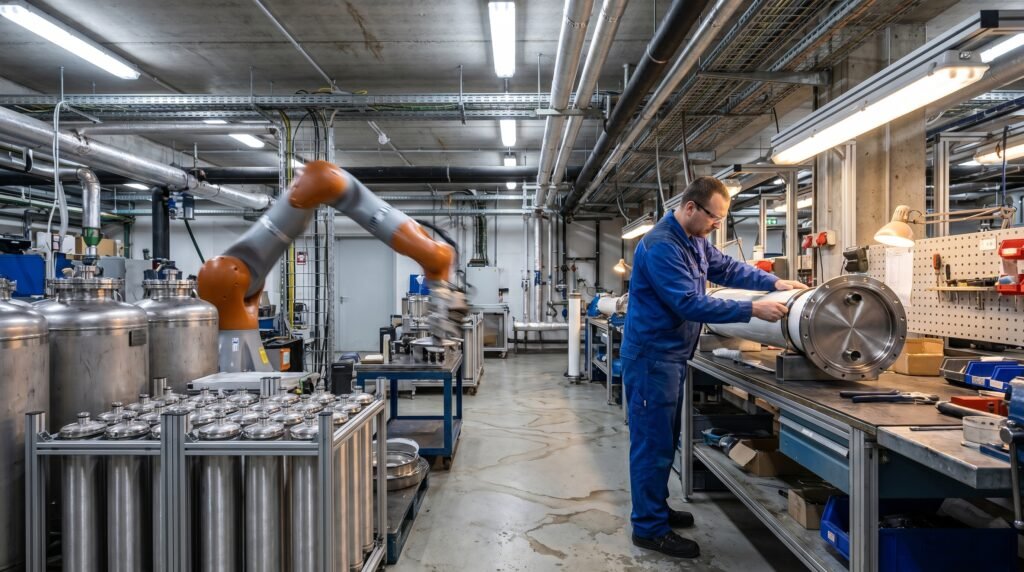
El precio no es una cifra única. Es la suma de las decisiones que tomáis tanto tú como tu cliente. Una vez que comprendas los factores que lo determinan, podrás ofrecer un presupuesto con confianza y proteger tu margen. A continuación te explicamos cómo se calcula el coste.
¿Qué es lo que realmente determina el precio?
Hay tres factores que influyen más en el precio: la capacidad, la tecnología y la calidad. La capacidad es lo más importante. Un sistema con una capacidad de 0,5 T/h cuesta mucho menos que uno de 10 T/h. La tecnología es el siguiente factor. Cuando se añaden sistemas de rayos UV, remineralización, IoT inteligente o automatización total, el precio sube. La calidad de fabricación también cuenta. Las piezas baratas fallan pronto y el coste de la reparación recae sobre ti. Montamos con una tolerancia de 0,01 mm y probamos cada unidad, para que tu tasa de devoluciones se mantenga baja.
Por qué la oferta más barata puede salirte más cara
Un precio bajo parece una gran idea hasta que el producto falla en el mercado. Entonces tienes que pagar las piezas, la mano de obra y la pérdida de un cliente. He visto cómo los distribuidores buscan al proveedor más barato, ahorran un poco al principio y pierden mucho más en devoluciones y malas valoraciones. Una fábrica estable con una tasa de aprobación del 99,61 % en las pruebas TP3T y una garantía de dos años cuesta un poco más, pero te ahorra problemas más adelante. El coste total importa más que el precio de etiqueta.
Cómo proteger tu margen como distribuidor
Ganas dinero con el margen, por lo que hay dos factores que lo protegen. En primer lugar, un pedido mínimo de entrada (MOQ) bajo mantiene tu riesgo al mínimo. Ofrecemos muestras para distribuidores a partir de tan solo 10 unidades, para que puedas probar el mercado antes de comprometerte. En segundo lugar, un suministro y unas ventas constantes te ayudan a seguir vendiendo. Ofrecemos apoyo territorial y un kit de marketing, además de condiciones de pago flexibles mediante transferencia bancaria (T/T), carta de crédito (L/C) o PayPal, con un depósito del 30% y el 70% restante antes del envío.
La tabla siguiente muestra los principales factores que influyen en los costes. Pídenos precios exactos adaptados a tu mercado.
| Tipo de sistema | Capacidad habitual | Precio orientativo | Ideal para |
|---|---|---|---|
| Ósmosis inversa comercial | [X] T/h | [tu precio] | Hoteles, estaciones de servicio |
| Ósmosis inversa industrial | [X] T/h | [tu precio] | Embotellado, fábricas |
| Desalinización del agua de mar | hasta 2 T/h | [tu precio] | Mercados costeros e insulares |
| Complementos (UV, IoT, etc.) | — | +[tu precio] | Mayor potencial de margen |
Conclusión
La filtración de agua industrial consiste, en definitiva, en elegir el sistema adecuado para cada aplicación y, a continuación, seleccionar un fabricante en el que puedas confiar. Realizamos envíos a 45 países con un pedido mínimo reducido y toda la documentación de certificación. ¿Quieres un presupuesto para tu mercado? Escríbenos hoy mismo.