Una planta alimentaria de tu región te envía una solicitud de presupuesto. Quieren un sistema de tratamiento de agua y el pedido es importante. Pero aquí está el problema: si les ofreces un sistema inadecuado o eliges un fabricante poco fiable, las consecuencias recaerán sobre ti, no sobre ellos. He visto cómo buenos distribuidores han perdido a un cliente por una sola instalación defectuosa.
Para elegir los sistemas de tratamiento de agua destinados a la fabricación de alimentos y bebidas, hay que tener en cuenta tres aspectos: el consumo de agua de la planta, las certificaciones que exige el mercado local y un socio industrial que te respalde con piezas de recambio, envíos rápidos y una garantía real. Si aciertas en estos aspectos, cada venta de alimentos y bebidas protegerá tu margen de beneficio y tu reputación.
Esto es lo que hay detrás de cada una de esas tres opciones.
¿Por qué es importante la calidad del agua en la producción alimentaria?
Tus clientes tratan el agua como si fuera simplemente agua. Pero entonces un lote se enturbia, no supera una prueba o se estropea antes de tiempo. Y la primera llamada es para ti, su proveedor. Hemos visto cómo un solo problema con el agua puede echar por tierra meses de confianza.
La calidad del agua es fundamental en la producción alimentaria, ya que interviene en casi todas las fases del proceso. Se utiliza para lavar los alimentos, se mezcla con el producto, limpia la maquinaria y transporta el calor. Una agua de mala calidad afecta al sabor, reduce la vida útil y hace que no se superen los controles de seguridad. El agua limpia protege el lote, la marca y tu reputación como proveedor responsable del sistema.
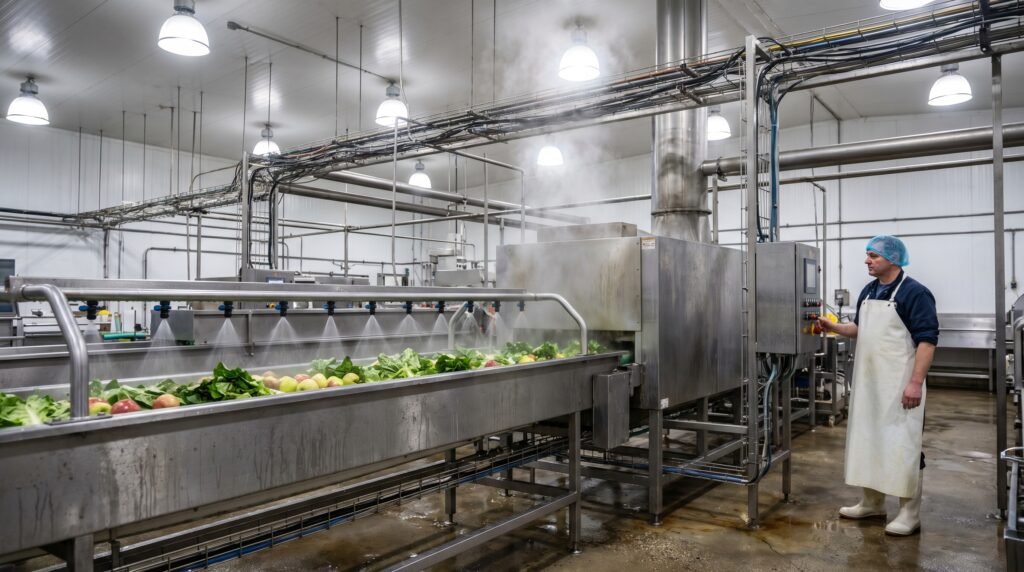
El agua no es un simple detalle secundario en una planta de alimentación o bebidas. En muchas bebidas, el agua representa más del 90% del contenido de la botella. Por lo tanto, el agua es el producto. En el sector alimentario, el agua se utiliza para lavar los productos agrícolas, transportar vapor y calor, y limpiar todas las superficies de contacto. Si el agua está sucia, el problema se extiende a todo lo que toca.
En los puntos en los que el agua entra en contacto con el producto 💧
Esta es una forma sencilla de verlo. El agua está presente en casi todas las etapas, y cada una de ellas conlleva sus propios riesgos.
| Etapa del proceso | ¿Qué hace el agua? | Riesgos si el agua es de mala calidad |
|---|---|---|
| Ingrediente: agua | Se integra en la bebida | Sabor extraño, turbidez, resultado negativo en las pruebas de laboratorio |
| Lavado y aclarado | Limpia los alimentos crudos | Las bacterias permanecen en el producto |
| Calefacción y refrigeración | Hace funcionar calderas y enfriadoras | Se acumula la cal y suben las facturas de energía |
| Limpieza de equipos (CIP) | Limpia depósitos y tuberías | Residuos que quedan, riesgo de contaminación entre lotes |
| Hielo y vapor | Enfría o cocina los alimentos | Contaminación oculta en el producto final |
¿Cuánto le cuesta a tu cliente —y a ti— el agua de mala calidad?
El agua de mala calidad sale cara. Un lote en mal estado se desecha. Un resultado negativo en una prueba puede paralizar toda una serie de producción. El agua dura deja incrustaciones en el interior de las bombas y las membranas, por lo que las máquinas se averían antes. Para tu cliente, eso supone pérdida de producto y tiempo de inactividad. Para ti, puede suponer reclamaciones de garantía, desplazamientos de servicio y un cliente que culpe al sistema que le vendiste.
Por eso, un sistema de agua limpia no es un gasto. Es protección. Nuestro sistema de ósmosis inversa (RO) de 8 etapas elimina partículas de hasta 0,0001 micras y alcanza un nivel de esterilización del 99,99%. La radiación UV continua mantiene el agua segura tras la filtración. Todas las piezas que entran en contacto con el agua están libres de plomo, por lo que no se filtra plomo en los alimentos ni en las bebidas. Cuando el agua se mantiene limpia, su cliente sigue elaborando un buen producto. Y usted recibe menos llamadas de servicio técnico y más pedidos recurrentes. Esa es la razón oculta por la que la calidad del agua protege su margen de beneficio, y no solo el lote de su cliente.
¿Qué normas debe cumplir el agua destinada a alimentos y bebidas?
Todo mercado tiene sus normas. Si se incumple alguna, el envío se queda retenido en la aduana o el sistema no supera la inspección in situ. Hemos visto casos de distribuidores que se han quedado atascados con material que no ha podido obtener la autorización local, con el capital inmovilizado y un cliente a la espera.
El agua destinada a alimentos y bebidas debe cumplir dos requisitos. En primer lugar, el agua debe ser apta para el consumo según la normativa local y los sistemas de seguridad alimentaria como HACCP e ISO 22000. En segundo lugar, los equipos deben contar con las certificaciones de acceso al mercado del país de destino, como SASO, BIS, NOM, INMETRO o CE. Ambos requisitos son fundamentales para garantizar una venta sin problemas.
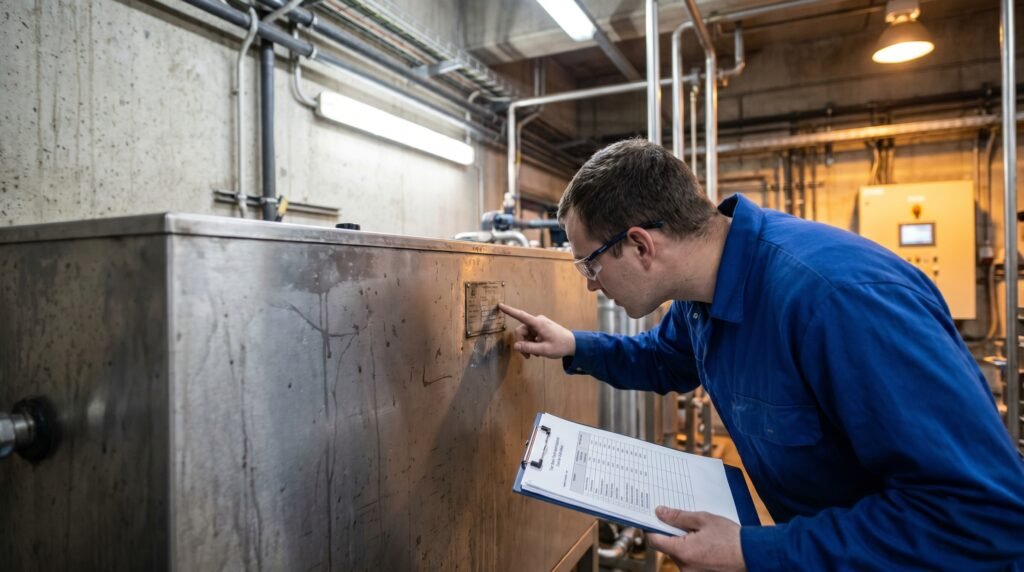
Muchos compradores confunden dos cosas diferentes. Una es la calidad del agua. La otra es la certificación de la máquina. Se necesitan ambas, y no son lo mismo.
Primer nivel: ¿es segura el agua?
El agua utilizada en una planta de alimentos o bebidas debe ser, como mínimo, tan limpia como el agua potable. Muchos mercados de Asia, África, Oriente Medio y América Latina basan sus normativas locales en las Directrices de la OMS sobre la calidad del agua potable. Los fabricantes de alimentos también siguen el Codex Alimentarius y aplican sistemas de seguridad alimentaria como el HACCP y la norma ISO 22000. Estos establecen límites para parámetros como las bacterias, los sólidos disueltos y el sabor a cloro. En el caso de las bebidas transparentes, el agua suele tener que ser más pura que el agua del grifo, con un bajo contenido en TDS y sin olores extraños.
Por lo tanto, el sistema tiene que realizar un trabajo real. Debe eliminar los sedimentos, separar los sólidos disueltos, eliminar los microbios y mantener esa calidad lote tras lote.
Segunda fase: ¿está el equipo certificado para su comercialización? ✅
Aquí es donde muchos acuerdos se atascan. Un sistema excelente no sirve de nada si no puede introducirse en el país. Cada mercado exige su propia autorización. Aquí tienes un resumen rápido.
| Certificación | Mercado principal | Para qué sirve |
|---|---|---|
| SASO | Arabia Saudí / Golfo | Seguridad de los productos y acceso al mercado |
| ESMA | Emiratos Árabes Unidos | Conformidad y acceso al mercado |
| BIS | India | Norma obligatoria sobre productos |
| NOM | México | Normas de seguridad y etiquetado |
| INMETRO | Brasil | Conformidad del producto |
| KC | Corea del Sur | Seguridad eléctrica |
| PSE | Japón | Seguridad eléctrica |
| CE | La UE y muchos mercados | Seguridad y conformidad |
Contamos con las certificaciones CE, SASO, BIS, INMETRO, NOM, KC, PSE, ESMA y muchas más. Además, ofrecemos asistencia en materia de cumplimiento normativo para más de 30 mercados. Así, cuando adquieres un sistema que ya cuenta con la certificación de tu mercado, el despacho de aduanas es más rápido, la instalación se supera sin problemas y cierras el trato sin sorpresas en materia de cumplimiento. Otro aspecto que puede destacar ante los clientes del sector alimentario: pregunte si las piezas en contacto con el producto son aptas para uso alimentario. Nuestras unidades no contienen plomo, lo cual es una clara ventaja cuando el agua se convierte en alimento o bebida.
¿Qué sistemas de tratamiento utilizan las plantas de alimentación y bebidas?
Una planta de agua embotellada, una fábrica de cerveza y una lechería no necesitan la misma configuración. Si citas la configuración equivocada, darás la impresión de que no conoces el sector. Hemos visto cómo ese único error puede romper la confianza en un abrir y cerrar de ojos.
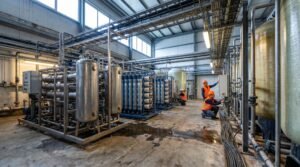
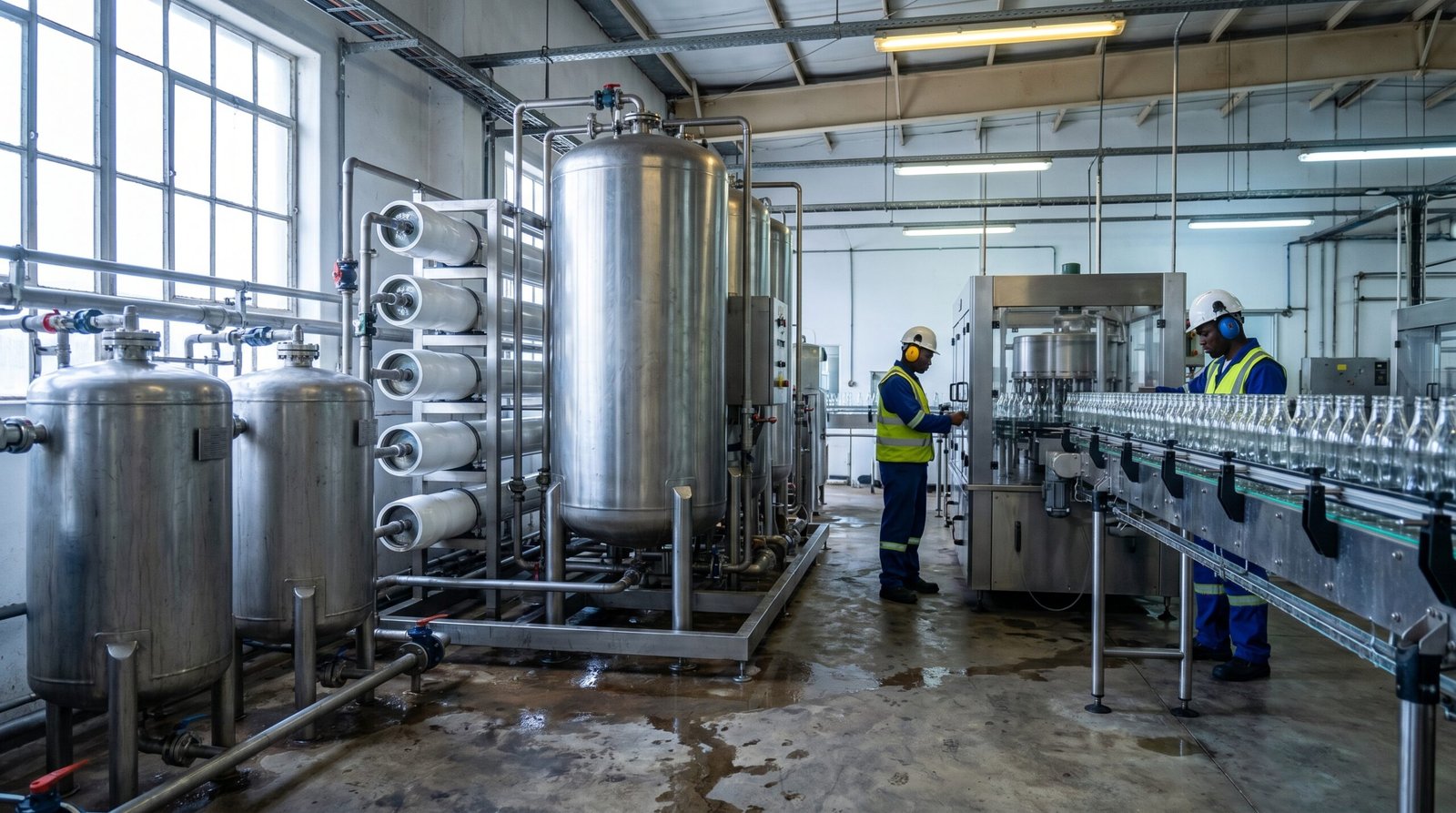
La mayoría de las plantas de alimentos y bebidas utilizan un sistema por etapas: prefiltración para retener los sedimentos, ósmosis inversa para eliminar los sólidos disueltos y esterilización por rayos UV para eliminar los microbios. Algunas añaden un proceso de remineralización para mejorar el sabor. A continuación, el sistema se adapta a la producción diaria de la planta, desde pequeñas líneas de embotellado hasta instalaciones industriales de gran volumen.
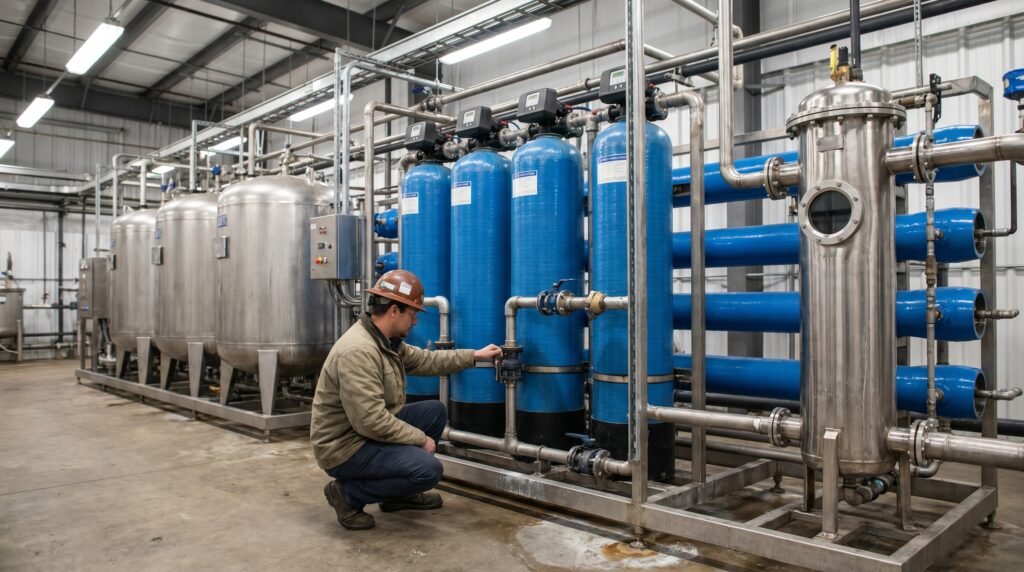
La buena noticia es que la mayoría de los sistemas de agua para el sector de la restauración comparten una base común. Una vez que conoces los elementos fundamentales, puedes adaptarte a casi cualquier cliente.
Los elementos fundamentales
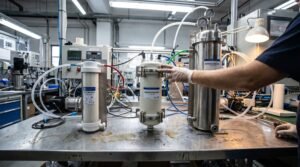
Una línea típica consta de cinco partes. La prefiltración retiene la arena, el óxido y las partículas de gran tamaño. La ósmosis inversa es el corazón del sistema. Nuestro sistema de ósmosis inversa de 8 etapas hace pasar el agua a través de una membrana de 0,0001 micras y alcanza un nivel de esterilización del 99,99%, por lo que elimina los sólidos disueltos que los filtros de grifo no retienen. La esterilización por UV se lleva a cabo después de la ósmosis inversa y garantiza la seguridad del agua sin necesidad de productos químicos. La remineralización es opcional. Nuestra etapa alcalina rica en estroncio puede añadir minerales para mejorar el sabor. Los sistemas de almacenamiento y dosificación retienen el agua limpia hasta que la planta la necesita.
Hay una característica que permite ahorrar dinero de verdad en mercados donde el agua es escasa: nuestro diseño sin aguas residuales. En algunas zonas de Oriente Medio y África, el agua es cara, por lo que un menor desperdicio se traduce en menores costes de funcionamiento para su cliente. Ese es un argumento de venta muy sencillo.
Adapta el sistema al cliente 🔧
Cada cliente del sector de la restauración requiere un enfoque diferente. Aquí tienes una guía sencilla que puedes utilizar a la hora de elaborar un presupuesto.
| Cliente del sector de la restauración | Necesidad principal de agua | Qué citar |
|---|---|---|
| Planta de embotellado de agua | Puro, estable, de buen sabor | Ósmosis inversa + UV + remineralización |
| Zumos y refrescos | Bajo TDS, sin sabor extraño | Ósmosis inversa + UV |
| Productos lácteos | Agua de lavado y de proceso segura | Ósmosis inversa + UV + prefiltro de alta eficacia |
| Cervecería y destilería | Minerales regulados | Ósmosis inversa + remineralización |
| Planta de hielo | Hielo limpio y transparente | Ósmosis inversa + UV + máquina de hielo |
| Procesamiento alimentario en general | Agua para lavado seguro y CIP | Prefiltro + ósmosis inversa + UV |
Complementos que te ayudan a vender más
Hay dos aspectos adicionales que son importantes para tu negocio, no solo para la planta. En primer lugar, el IoT inteligente. Nuestros sistemas pueden incorporar una sonda TDS y una aplicación con alertas sobre la vida útil de los filtros. Cuando llega el momento de cambiar un filtro, la aplicación se lo indica al cliente. Esto genera pedidos de repuestos y filtros, lo que supone unos ingresos recurrentes y estables para ti. La aplicación se puede personalizar con su marca, por lo que puede mostrar su nombre. En segundo lugar, la gama de productos. Fabricamos más de 200 modelos y maquinaria para el procesamiento de alimentos, por lo que puedes atender a muchos clientes con un solo proveedor en lugar de tener que recurrir a cinco. Para las plantas costeras cercanas al mar, también construimos sistemas de desalinización de agua de mar de hasta 2 T/h. Para las grandes plantas del interior, dimensionamos las líneas industriales de ósmosis inversa (RO) según la producción diaria que necesites.
¿Cómo se elige el sistema adecuado para una planta de alimentación y bebidas?
El sistema es importante. Pero la fábrica que lo respalda lo es aún más. Un producto barato sin piezas de recambio y con envíos lentos te hará perder clientes. Hemos visto a distribuidores atrapados con productos que no podían reparar ni reponer, y los clientes se han marchado.
Elige el sistema adecuado ajustando su capacidad a la producción diaria de la planta y asegurándote de que cuenta con las certificaciones exigidas por tu mercado. A continuación, comprueba la fábrica que lo fabrica. El mejor socio te ofrece un margen mayorista justo, un pedido mínimo de entrada (MOQ) bajo, repuestos rápidos, envíos puntuales y una garantía de dos años en la que puedes confiar.
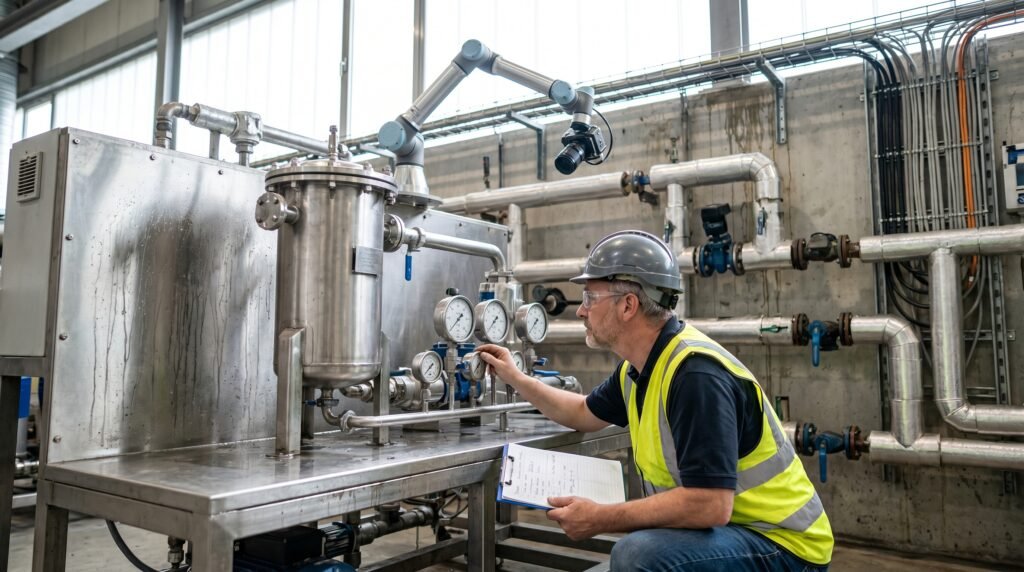
Un buen sistema fabricado por una empresa con poca solidez sigue siendo un riesgo. Por eso, la verdadera decisión es elegir al socio adecuado. A continuación explicamos cómo creemos que un distribuidor debería evaluar a un socio.
Paso 1: hacer coincidir la capacidad y los certificados
Empieza por la producción diaria de la planta y su mercado. Dimensiona el sistema en función del volumen, no del precio más bajo. A continuación, comprueba que la unidad cuente con la certificación local antes de realizar el envío. Así se evitan los dos factores que más suelen echar por tierra un acuerdo: un sistema demasiado pequeño y un sistema que no puede pasar la aduana.
Paso 2: evalúa la fábrica, no solo el precio 🔍
El precio es fácil de comparar. La fiabilidad es más difícil de evaluar, y es lo que más importa. Una trayectoria de 15 años te garantiza que la fábrica seguirá aquí para atender tus reclamaciones de garantía. Nuestra fábrica de 50 000 m² utiliza un sistema de montaje con visión robótica con una tolerancia de 0,01 mm, por lo que la calidad se mantiene constante en todos los lotes. Busca pruebas, no promesas.
Esto es lo que hemos puesto sobre la mesa.
| Qué hay que comprobar | Por qué es importante para ti | Nuestra respuesta |
|---|---|---|
| Historial de exportaciones | Demuestra que pueden realizar envíos y tramitar la documentación | 45 países, más de 2 000 000 de unidades, más de 500 socios B2B |
| Índice de aprobación de fábrica | Menos defectos, menos llamadas al servicio técnico | Índice de aprobados del 99,61 TP3T |
| Pruebas | Confirma que todas las unidades funcionan | Prueba de estanqueidad, de caudal de agua y de envejecimiento de 24 horas del modelo 100% |
| Laboratorio y sala limpia | Un control de calidad auténtico | Laboratorio certificado por el CNAS, sala limpia de clase 100K |
| Patentes e I+D | Diseño auténtico, no una copia | Más de 120 patentes, más de 50 ingenieros |
| Inspección | Verificación independiente antes de pagar | Inspecciones realizadas por terceros, como SGS, BV o TÜV |
Esta es la parte que te protege de tu mayor temor: los problemas de calidad ocultos. Cuando 100% unidades superan las pruebas de estanqueidad al aire, de caudal de agua y de envejecimiento de 24 horas, puedes enviarlas a tu cliente con total confianza.
Paso 3: comprueba las condiciones que protegen tu efectivo y tu margen
Las condiciones del acuerdo determinan el nivel de seguridad de tu dinero. Mantenemos un umbral de entrada bajo y un proceso claro. Puedes empezar con muestras de distribuidor a partir de 10 unidades, para que las pruebes antes de comprometerte. El pago consiste en un depósito del 30% y el 70% restante antes del envío, mediante transferencia bancaria (T/T), carta de crédito (L/C) o PayPal. Durante la producción, recibirás actualizaciones diarias con fotos y vídeos, para que no haya sorpresas. Realizamos envíos en condiciones FOB, CIF o DDP desde Qingdao o Shanghái. DDP significa «puerta a puerta», lo que te libera de los quebraderos de cabeza relacionados con la logística. Cada unidad incluye una garantía de dos años. Además, las piezas de recambio y los filtros te garantizan ventas recurrentes tras el primer pedido.
Paso 4: busca el apoyo que te ayude a triunfar
También necesitas ayuda para vender, no solo un producto. Trabajamos como una extensión de tu equipo. La aplicación de IoT personalizable con tu marca y nuestro servicio OEM/ODM te permiten poner tu propio nombre en el producto. ¿Quieres hablar sobre el territorio y un plan de marca compartida para tu mercado? Estaremos encantados de mantener esa conversación.
Conclusión
El agua limpia protege a tus clientes de alimentos y bebidas. El sistema adecuado y una fábrica de confianza te protegen a ti. Comprueba que la capacidad sea la adecuada, verifica las certificaciones y elige un socio con experiencia demostrada. ¿Quieres un presupuesto o una muestra? Ponte en contacto con nosotros hoy mismo.